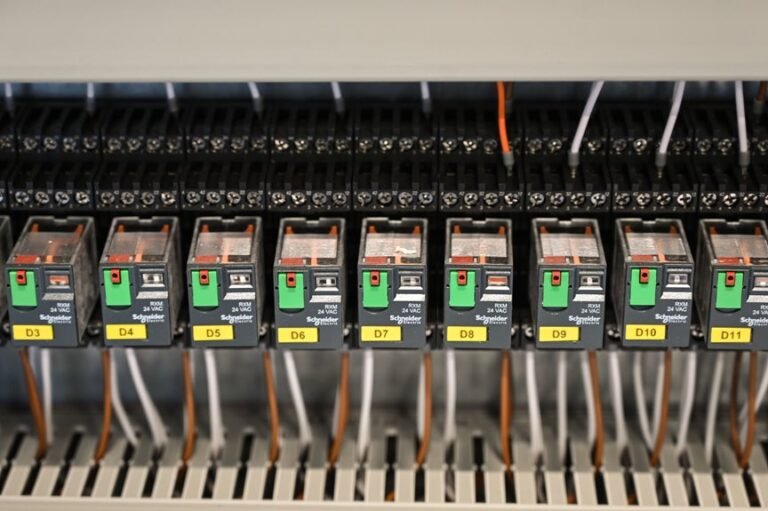
AetherPulse Relay Matrix – 8582513828, 5167866943, 4702312109, 8779140059, 6186227546
The AetherPulse Relay Matrix coordinates five hubs—8582513828, 5167866943, 4702312109, 8779140059, and 6186227546—each contributing specific roles for timing, routing, validation, resilience, and policy enforcement. The network seeks sub-nanosecond synchronization and self-healing through real-time quantum timing, while preserving transparency and data sovereignty. Governance favors autonomy and symmetry, with hub-driven decisions shaping fault tolerance and ethics-aligned deployment. As tensions between performance and governance emerge, the framework invites scrutiny on practical tradeoffs and implementation challenges.
What Is the AetherPulse Relay Matrix and Why It Matters
The AetherPulse Relay Matrix is a theoretical framework for coordinating energy and information transfer through a network of synchronized nodes. It analyzes efficiency, reliability, and governance structures, emphasizing autonomy and transparency. AI ethics, data sovereignty, and hub governance shape decision pathways; quantum timing enables synchronization, while self healing and network resilience sustain operations. Clarity, accountability, and freedom-driven design guide implementation.
Inside the Five Hubs: Roles of 8582513828, 5167866943, 4702312109, 8779140059, and 6186227546
Inside the Five Hubs, the roles of nodes 8582513828, 5167866943, 4702312109, 8779140059, and 6186227546 are delineated by function, interface, and governance posture; each hub contributes a distinct capability to the AetherPulse network—timing, routing, validation, resilience, and policy enforcement—while maintaining synchronized operation through quantum-timed coordination. This arrangement embodies conceptual symmetry and clear network codification.
How Real-Time Quantum Timing Enables Self-Healing Networks
Real-time quantum timing provides a foundational lattice for self-healing networks by synchronizing node operations with sub-nanosecond precision across the AetherPulse fabric. This mechanism enables rapid fault isolation, deterministic recovery, and adaptive reconfiguration.
Quantum timing constrains latency, preserves coherence, and supports continuous operation, while self healing emerges from proactive calibration, measurement-driven adjustments, and distributed consensus under fluctuating conditions.
Potential Applications and Future Impacts Across Industries
Potential applications of the AetherPulse Relays extend across sectors by enabling ultra-precise timing, resilient networks, and scalable coordination.
Analytical assessment identifies impacts on critical infrastructure, finance, and manufacturing through synchronized operations and fault tolerance.
Future deployment emphasizes disaster recovery capabilities and continuous performance monitoring, while ethical deployment considerations ensure transparency, data integrity, and stakeholder accountability within autonomous coordination ecosystems.
Frequently Asked Questions
How Secure Is the Aetherpulse Network Against Quantum Attacks?
The network demonstrates substantial resilience against quantum attacks, though precise security depends on implementation. It emphasizes post quantum cryptography and quantum resilience in protocols, adopting rigorous standards to preserve freedom while mitigating emerging cryptanalytic risks.
Can Hardware IDS Be Spoofed Within the Relay Matrix?
Spoofing hardware IDs within the relay matrix is constrained; VPN spoofing attempts may be detected, yet subtle manipulation of firmware obscurity could obscure provenance. The system remains analytical, methodical, precise, balancing security with user-driven freedom.
What Maintenance Cadence Ensures Optimal Self-Healing Performance?
Maintenance cadence should align with system telemetry, test cycles, and mean-time-repair data to optimize self healing performance. It emphasizes regular validation, trend analysis, and adaptive adjustments, balancing thorough checks with operational autonomy for freedom-minded deployments.
Do Hubs Influence Latency Differently Under Load?
Under load, hub topology influence modulates latency under load, with densely connected hubs reducing delays while sparse configurations exhibit higher contention; measurement shows consistent patterns across trials, supporting deliberate topology decisions to optimize performance and freedom.
Is There a Scalability Limit for Node Expansion?
Node expansion encounters scalability boundaries; beyond certain thresholds, performance degrades due to coordination overhead, resource contention, and security concerns, demanding careful governance. The system remains analytic: scalability boundaries constrain growth while preserving integrity and freedom-oriented operation.
Conclusion
The AetherPulse Relay Matrix embodies a disciplined architecture where synchronized timing, autonomous routing, and adaptive recovery coalesce to sustain critical networks. Each hub contributes distinct governance and resilience functions, driving transparent, ethics-aligned deployment across sectors. An illustrative statistic: sub-nanosecond synchronization enables fault containment within microseconds, reducing outage impact by orders of magnitude. This precision supports scalable, self-healing ecosystems, though vigilant governance is essential to preserve data sovereignty and ensure symmetric, accountable decision pathways across all hubs.