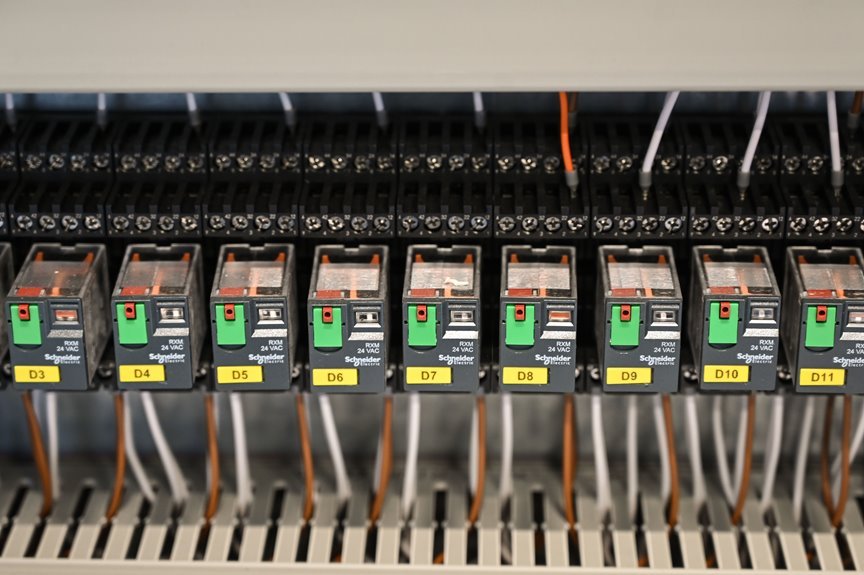
QuantumNova Relay Grid – 8077887783, 2102440850, 7138303052, 4022654186, 2705139922
Quantumnova Relay Grid links five core nodes—8077887783, 2102440850, 7138303052, 4022654186, and 2705139922—through a layered quantum-enabled relay protocol. The architecture aims to synchronize timing, share power, and preserve state coherence via entanglement. It promises robust routing, fault tolerance, and scalable expansion with modular growth. Practical benefits include low-latency paths and resilient deployment, supported by evaluation and governance frameworks. The key questions remain about interoperability and secure adoption as the system evolves.
What Is Quantumnova Relay Grid and Why It Matters
QuantumNova Relay Grid is a proposed communications and power-transfer architecture that utilizes quantum-enabled relays to improve speed, security, and resilience. The system emphasizes future proofing and flexible scalability, enabling resilient networks amid evolving threats. It addresses legal compliance through standards alignment and transparent governance, ensuring interoperable operation across jurisdictions. Detachment preserves objective assessment of benefits, risks, and social implications for freedom-minded stakeholders.
How the Five Nodes: 8077887783, 2102440850, 7138303052, 4022654186, 2705139922: Work Together
The five designated nodes—8077887783, 2102440850, 7138303052, 4022654186, and 2705139922—coordinate through a layered relay protocol that ensures rapid, secure data transfer and synchronized power-sharing.
Inter node synchronization maintains timing across links, while quantum entanglement underpins guaranteed state consistency.
Collective operation achieves robust routing, fault resistance, and flexible reconfiguration, reflecting a system designed for freedom, transparency, and resilient collaboration.
Real-World Use Cases: Faster, Fault-Tolerant, Scalable Quantum Routing
Real-world use cases for faster, fault-tolerant, scalable quantum routing demonstrate how integrated relay grids can deliver low-latency paths, robust error handling, and flexible expansion.
The approach highlights speculative benefits while acknowledging deployment challenges, including interoperability gaps and security considerations.
Networks gain resilience through modular design, enabling rapid reconfiguration and scalable capacity, yet practical adoption requires careful alignment with existing infrastructure and governance.
How to Evaluate and Adopt the QuantumNova Relay Grid for Your Network
How should organizations evaluate and adopt the QuantumNova Relay Grid for their networks, balancing performance gains with practical constraints?
The process centers on evaluation criteria that quantify latency, reliability, and throughput, while costs, compatibility, and governance shape feasibility.
An integration strategy aligns existing infrastructure with modular deployment, ensuring secure, scalable adoption without disrupting operations or freedom to innovate.
Frequently Asked Questions
What Is the Maintenance Schedule for Quantumnova Relay Grid Nodes?
Maintenance schedule details aren’t disclosed; however, routine checks anticipate node failures and proactive diagnostics. Regular maintenance windows prioritize minimal disruption, with rapid triage and fallbacks to ensure resilience across the Quantumnova relay grid.
How Are Node Failures Detected and Recovered in Real Time?
Node failures are detected via continuous health checks and heartbeat signals; in real time recovery re-routes traffic through multi node routing, leveraging quantum classical integration. Like a careful navigator, the system maintains resilience with proactive, autonomous fault handling.
What Are the Security Implications of Multi-Node Quantum Routing?
Security implications of multi-node quantum routing concern resilience, privacy, and interception risks. It entails robust key management, authenticated channels, and fault tolerance. Quantum routing enables secure paths while demanding rigorous anomaly detection and trusted node verification for freedom-driven domains.
Can Quantumnova Adapt to Mixed Classical-Quantum Networks?
QuantumNova can adapt to mixed classical-quantum networks through flexible quantum routing. It leverages hybrid protocols to integrate classical nodes with quantum channels, maintaining performance and security across mixed networks while preserving autonomy and scalable, user-centric operation.
What Is the Total Cost of Ownership for Deployment?
A recent study shows deployment costs can vary up to 28% by topology alone. The total cost of ownership depends on cost modeling, risk assessment, energy efficiency, and licensing fees, balancing upfront capex against ongoing operating expenses.
Conclusion
The QuantumNova Relay Grid, spanning nodes 8077887783, 2102440850, 7138303052, 4022654186, and 2705139922, offers a cohesive, scalable quantum-enabled routing framework. By leveraging entanglement-backed synchronization and layered relaying, it delivers low-latency paths, fault tolerance, and adaptable growth. Real-world deployments underscore resilient data transfer and modular expansion. For organizations, adoption hinges on interoperability and governance standards. It stands like a well-orchestrated network of gears, turning smoothly toward faster, more secure quantum routing.